Skip to content

your bag

your bag is empty

planting the future: the 11 million trees project

planting the future: the 11 million trees project

At Bell Lane, we know that coffee can be a force for good, especially for the communities and ecosystems that produce it. That’s why we're proud to back the 11 Million Trees Project in Timor-Leste, led by our long-standing sourcing partner, Raw Material.

This project is a long-term investment in coffee, people, land, climate, and the ecosystems that support coffee production.

coffee at the core

This is, first and foremost, a coffee-led project. After gaining independence in 2002, Timor-Leste became the most reliant on oil of all nations in the world with 95% of its income tied to oil exports. That stream of income is now diminishing.

The country's second largest industry is coffee, but the current coffee infrastructure presents some challenges:

  • coffee trees are 40 years old on average
  • productivity is low (about 20% of the global average)
  • yearly harvests provide an unpredictable yield

Coffee is grown by 37.5% of Timor-Leste households. However, most of these people live below the poverty line. This project aims to change this by:

  • planting a test forest to determine which varietals perform best in Timor-Leste's evolving climate
  • develop a large scale nursery to supply seedlings to 10,000 local families
  • lift incomes immediately and in the long-term

seedlings growing in a nursery in timor-leste

raw material & phase one

Our coffee sourcing partners, Raw Material, have spent eight years on the ground in Timor-Leste already, testing processing methods, improving quality, and getting to know the opportunities and limitations of power, transport, training, marketing, and agronomy.

They've already looked at renewable energy, plastic repurposing, and bamboo infrastructure in partnership with Engineers Without Borders. Together, they aim to form a practical and regenerative system that will lift yields, stabilise quality, and double the value of coffee exports.

Most importantly, their efforts and our collective support will reduce poverty for coffee-growing households. As we launch phase two, we’re inviting you to join us and become part of this change.

matt and ameta from raw material

more than trees

While being a coffee led project that aims to double coffee production in the region, the 11 Million Trees project also aims to:

  • halve poverty rates
  • build climate resilience that lasts for generations

To achieve this, Raw Material is planting disease-resistant, high-yield varietals in a soon to be developed testing forest. This will help identify which plants are best suited to Timor-Leste’s evolving climate.

From there, a large-scale nursery will provide seedlings to 10,000 local households, boosting incomes in both the short and long-term.

coffee being processed in timor-leste

the ecosystem around coffee

This is where things get really interesting. It’s not just about what grows, but about how it’s grown and how it can be sustained.

The 11 Million Trees initiative will also see:

  • unwanted solar panels from Australia being reused to power processing stations
  • plastic waste being turned into components and tools
  • locally sourced bamboo being used as a sustainable and local way to replace rust-prone steel 

This all speaks to our B Corp values at Bell Lane where every decision we take is aimed at benefitting people and the planet.

plastic upcycling in timor-leste

why we’re getting involved

We’ve worked with Raw Material for years, sourcing coffees from the producers they support and sharing their mission of value distribution. Backing this project is a natural continuation of that relationship and an exciting step for everyone at Bell Lane.

This project also asks and answers the right type of questions:

  • how do we protect coffee’s future in the face of climate change?
  • how can we support farmers to earn more, not just survive?
  • how do we rebuild systems that were never built with equity in mind?

We’re proud to be part of the answer and you can can get involved too.

a farmer fertilises a young coffee tree in timor-leste

how you can get involved

Bell Lane isn’t alone in this project. Other roasteries and coffee lovers around the world are getting behind this initiative because when we work together we can do so much more than anything we do alone.

If you’d like to be part of this project, you can pledge your support, from planting a single tree, to a forest, or even joining the global tasting team.

This is an opportunity to plant something that grows beyond us all, while leaving a lasting impression for the people of Timor-Leste for generations to come.

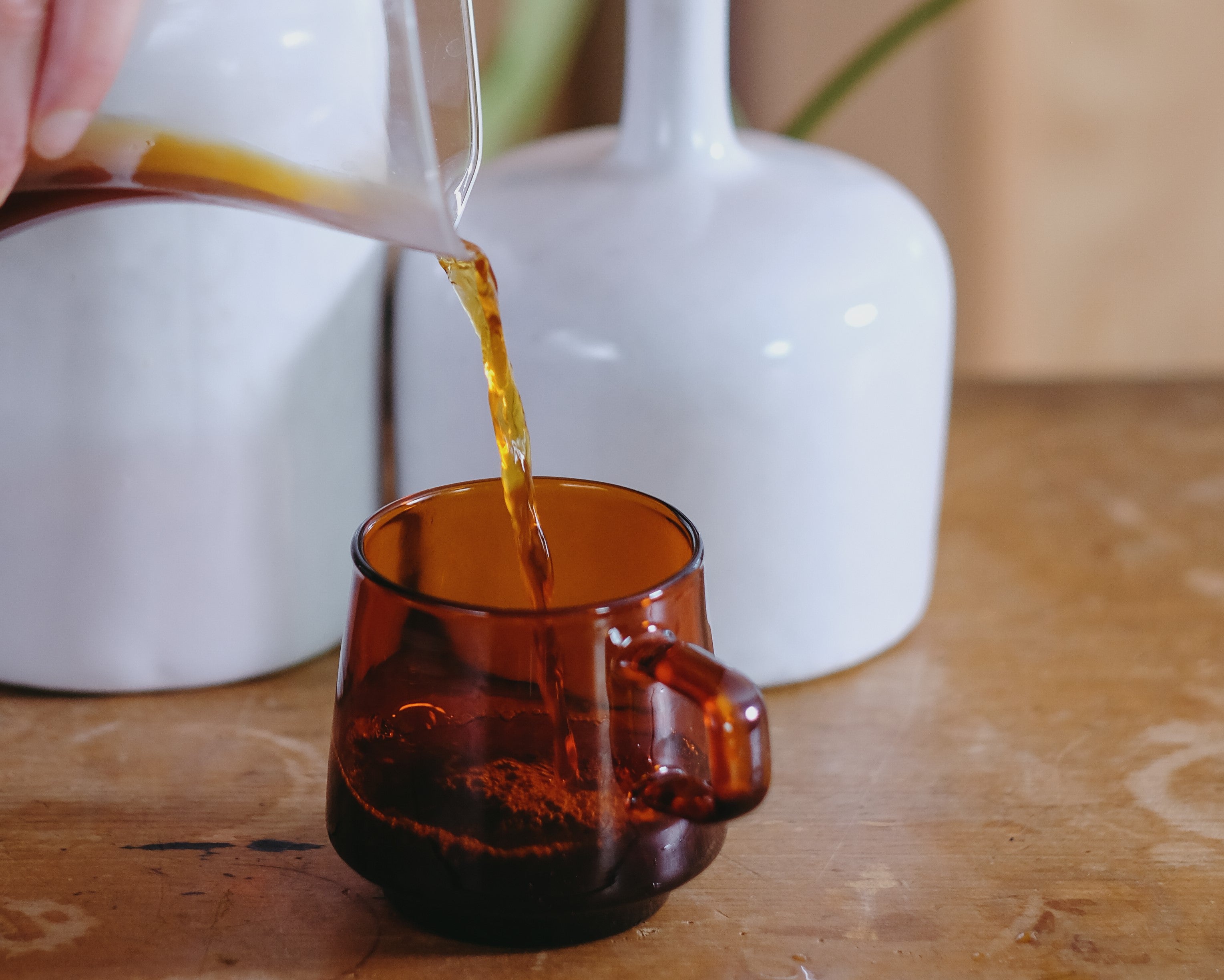
the team on the ground in timor-leste
Standart + Bell Lane Coffee Issue #32

Standart + Bell Lane Coffee Issue #32

Before we dive into the fascinating tale of Los Castaño Coffee Farms, let's take a moment to uncover why we chose this exceptional coffee.  Over the last years the current trends are leading to focus on special fermentation practices that often deliver the cup profile where fermentation is more pronounced than coffee itself. When selecting this Castillo our intention was to remind us that a beautiful crisp washed is still something that will always stay on top of our list.   In the world of specialty coffee, where dedication and passion converge, there are stories that stand out.  Brothers Alfredo and Eunilver Castaño’s journey is one etched with unwavering determination. We are proud to introduce their exceptional coffee to the Standart community.   Producers: Alfredo & Eunilver Castaño  Farms: El Recinto & El Futuro  Municipality: Santuario Department: Risaralda Variety: Castillo  Process: Washed, 360h Extended Fermentation  Cup notes: Floral, Raspberry, Lemongrass, Caramel  In the picturesque landscapes of Colombia's Santuario region lies a tale of resilience, dedication, and an unwavering passion for coffee. Meet Alfredo and Eunilver Castaño, the brothers behind the renowned Los Castaño coffee farms. Through adversity, conflict, and challenges, their journey has transformed barren lands into thriving coffee plantations. This is all while uplifting their community and producing exceptional coffee.   Alfredo and Eunilver Castaño's connection to coffee runs deep. From their earliest memories, they played among coffee plants, learning the art of cultivation from their parents. As youngsters, they embraced the traditions of planting and nurturing coffee, gaining an intimate understanding of the craft. At just twelve years old, they left school to support their family by working full-time on coffee farms. Despite the challenges, Alfredo continued his studies and eventually earned his Baccalaureate.   In 1995, the Castaño family purchased a plot of land, marking the birth of El Recinto farm, meaning 'Enclosure.' With relentless determination, they transformed rugged terrain into a conventional coffee farm. Through hard work, they built a wooden dwelling from harvested wood, nurturing both the land and their dreams. However, life had other plans, and the civil war in 1999/2000 forced them to leave their farm for nearly a year.   The civil war brought immense challenges. The dense forests that once surrounded farms became corridors for guerrilla movements, disrupting lives and businesses. Forced to flee the city of Pereira, the family endured loss and turmoil. During that time, Eunilver worked as a farm manager and saved diligently. With his savings and a small loan, he purchased a 20-acre coffee farm from his aunt, aptly named El Futuro, or 'The Future.' He restored the neglected land, and both brothers together began their coffee planting El Futuro became a symbol of rebirth, complete with a thriving coffee crop, a home for Eunliver's family, and advanced processing facilities for both of their farms.   In 2012, the brothers, along with local families, founded Asocafe Tatama, a collective of high-quality coffee producers. This alliance aimed to enhance coffee value and uplift living standards through collaboration. With 95 families joining the association, their efforts gained momentum. The collaboration attracted Socodevi, an NGO, and Q Processing instructor Hernando Tapasco, who played a pivotal role in shaping the future.  Under Hernando Tapasco's guidance, the Castaño brothers discovered new coffee processing techniques. Their pursuit of excellence led them to specialty coffee, where they could surpass commodity prices. Eunilver focused on production, while Alfredo became a Level 2 Q Professor at the Coffee Quality Institute. Their joint efforts honed their skills in fermentation, processing, and drying, resulting in remarkable coffees.     The story of Los Castaño coffee farms is a remarkable tale of triumph over adversity. Alfredo and Eunilver Castaño's unyielding passion, even in the face of conflict and challenges, has transformed their family's lands into flourishing coffee havens. Their dedication, unity, and commitment to quality have yielded exceptional coffee and inspired an entire community.     BREWING GUIDE   Pour-over V60 02  Coffee to water/ratio: 22g coffee to 340g water 1:15.45  Grind: Medium-fine grind. 20 clicks on Comandante, 7 on EK43 (1-11 dial)  Water temperature:  96°C  Method: Pre-rinse filter, bloom with 50g, at 30 sec pour up to 180g, at 1:15 pour up to 340g final weight.   Brew time: 2:30 – 2:45    French Press  Coffee to water/ratio:  1:15   Grind: Medium-fine grind. 20 clicks on Comandante, 7 on EK43 (1-11 dial)  Water temperature:  97°C  Method: Pour total volume, break the crust after 4:00 min, leave to sit and serve at 10:00      SHAKE-UP Having just moved into our new roastery earlier this year, it seems the perfect time for a brand refresh.  Until the brand launch this October we will still send out coffee in our existing bags!  Alfredo and Eunilver Castaño's connection to coffee runs deep. From their earliest memories, they played among coffee plants, learning the art of cultivation from their parents. As youngsters, they embraced the traditions of planting and nurturing coffee, gaining an intimate understanding of the craft. At just twelve years old, they left school to support their family by working full-time on coffee farms. Despite the challenges, Alfredo continued his studies and eventually earned his Baccalaureate. In 1995, the Castaño family purchased a plot of land, marking the birth of El Recinto farm, meaning 'Enclosure.' With relentless determination, they transformed rugged terrain into a conventional coffee farm. Through hard work, they built a wooden dwelling from harvested wood, nurturing both the land and their dreams. However, life had other plans, and the civil war in 1999/2000 forced them to leave their farm for nearly a year.

Discover more
Gesha

Gesha

Gesha became very popular after it was first presented on the WBC stage and that’s how all the “Gesha hype” started.  However, it is important to say that the variety originates from Ethiopia and carries beautiful floral, delicate, and sweet notes that I, as a roaster, love.  Although today with different fermentation techniques some lots in my opinion are taken to a different level where Geisha profile is muted, and we taste the fermentation style in the cup over the variety. Saying that this was my guideline when I was choosing the lots for us. Since this was our first Gesha release I was looking for lots that in my opinion are free of any “modulated” flavours. As I can recall, I first tried Gesha 7 years ago. It was a natural from Finca Hartmann. It was beautiful and I can still remember the time and place when I had it. Trying so many coffees over the past decade, it is amazing that I can still recall it so well. From that moment on I had this goal that one day I’ll be roasting it myself. So here we are 7 years later and I have three different lots, guess when you work towards something it has to happen one day. Logging more than 20k batches and with so much experience it came to me as a reward and a new challenge that I very much looked forward to. Every roaster has their style so now it was my moment to say this is the way it needs to be done. Timing for premium coffee came naturally to our roastery. We have roasted some beautiful coffee over the last few years that when we were brainstorming about bringing something special we all agreed it had to be Gesha to start with. Since I am a green buyer for the company this was my chance to choose the lots that highlight the characteristics of the variety. The Initial idea was to bring only washed and natural but I was asked to cup La Mina for feedback, it was outstanding - and that’s how we ended up with a washed, natural and honey processed Gesha. Monteverde was the obvious choice for me, as an advocate for washed process Monteverde was just beautiful, super floral, delicate, and pretty. Finding a natural was a bit of a challenge as the majority of lots I’ve cupped were not free of “ferment”. The amazing team from Colombian Spirit called and said “we have the natural that you are looking for” and they were right. Inmaculada is beautiful! The natural process was done so gently that you might ask yourself.. is it a natural?  The honey processed La Mina brings a unique experience for those looking to try something with a bit of “funk” When it comes to brewing, I always recommend to everyone to explore and see what works for them when it comes to ratio, water temp, and brew time but we have added our suggested brew guide in the tasting notes for those looking for a guideline. However, I do highly recommend a good grinder like Comandante and using soft water for brewing.   When drinking Gesha, expect coffee with no bitterness. It is very delicate and layered and should be enjoyed slowly allowing the flavours to unfold as it cools.

Discover more